empirica Vacancy Forecast: Between Scarcity and Oversupply


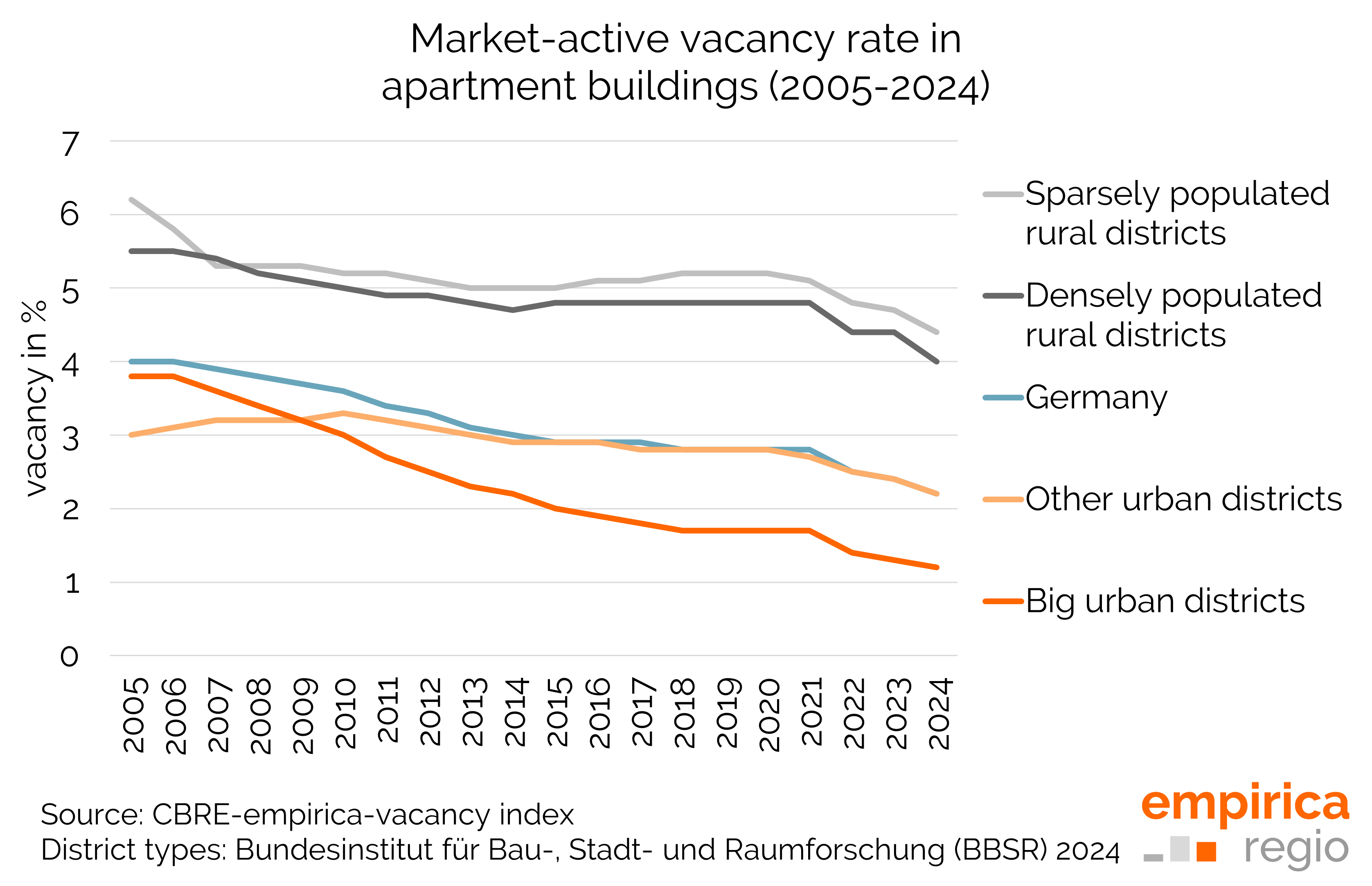
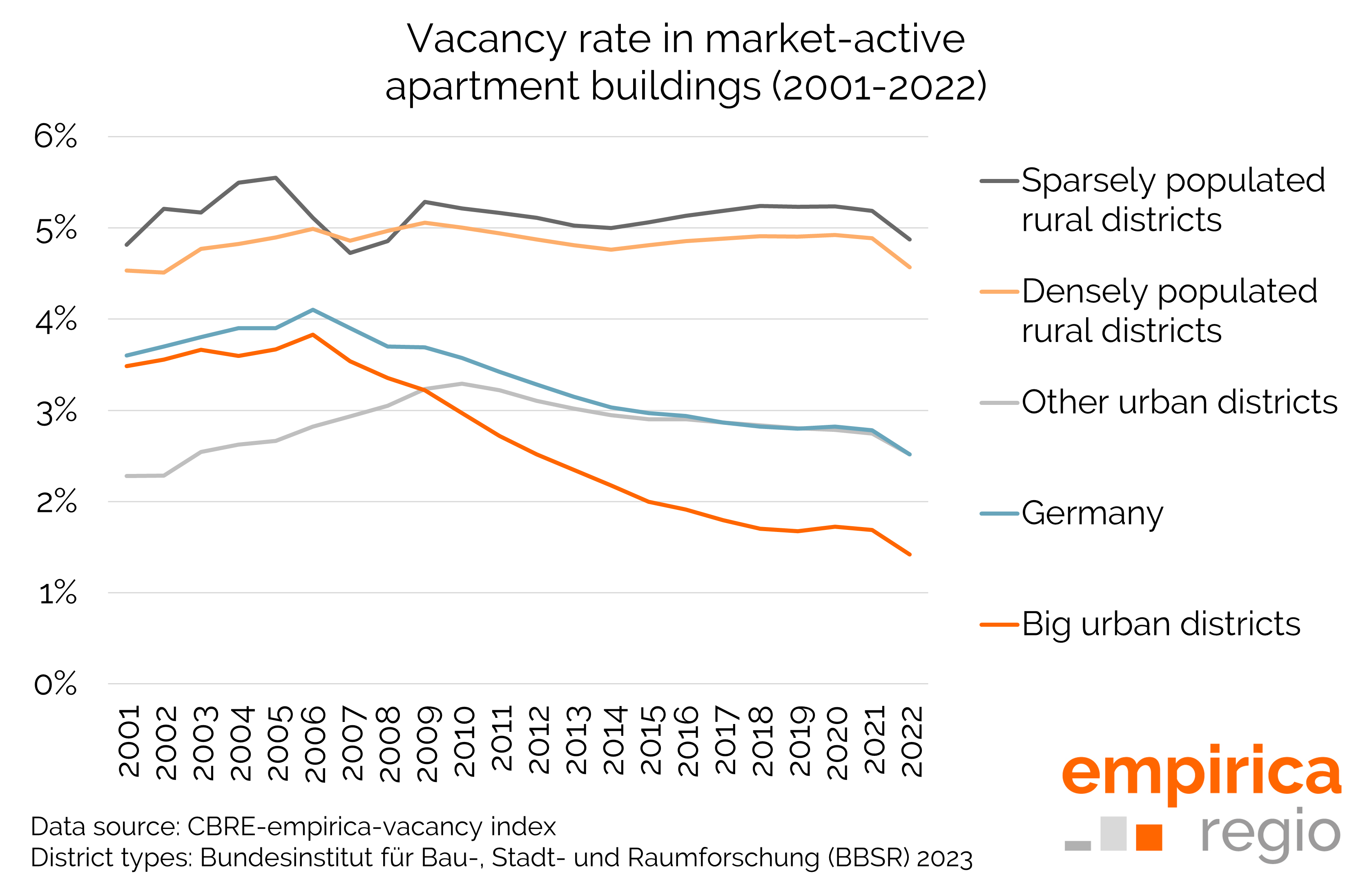
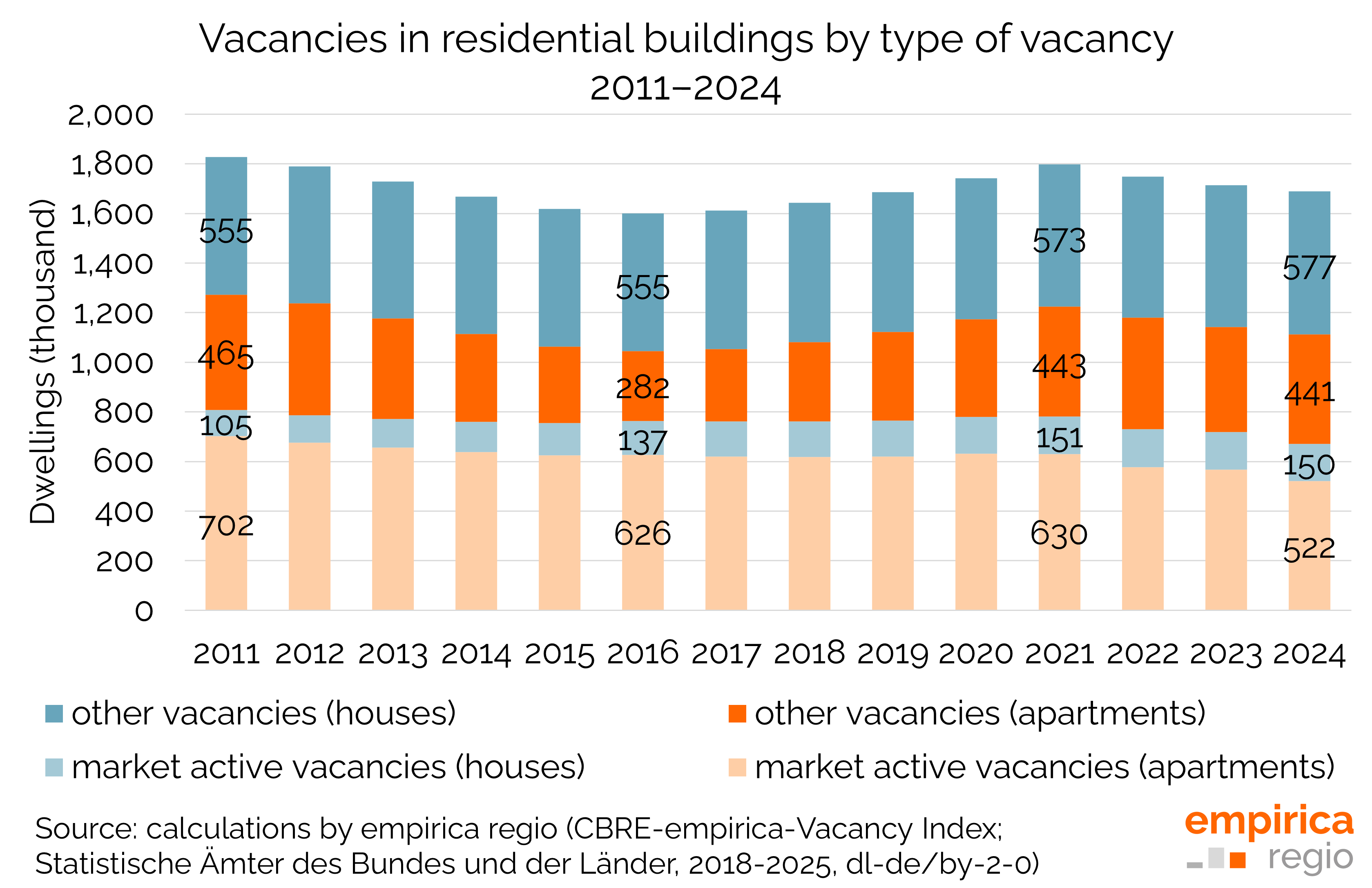
At the end of 2024, the German housing market recorded a total vacancy of around 1.7 million dwellings, corresponding to a vacancy rate of 4.0 per cent. Of the total 1.689 million vacant dwellings, 963,000 units were in apartment buildings and 727,000 in single-family and two-family houses. The situation remains particularly critical in regions experiencing population decline, where the vacancy rate could exceed the 20% threshold by the mid-2030s.
Actual vacancy figures from 2011 to 2024
Empirica’s vacancy figures relate exclusively to residential buildings. Both the actual figures and the forecasts distinguish between flats in apartment buildings and those in single-family or two-family houses. A key distinction is made between market-active vacancies, which comprise properties available for immediate occupancy, and other vacancies, which also include derelict buildings or ruins. Total vacancy stood at 1.689 million flats at the end of 2024. Compared with the previous year, 2023, the vacancy volume nationwide declined slightly, falling by around 25,000 units.
By the end of 2024, only 671,000 dwellings were classified as market-active vacancies, comprising 521,000 units in apartment buildings and 150,000 in single-family and two-family homes. Whilst around 40 per cent of the total vacancy stock is therefore immediately available to the market, 60 per cent is accounted for by other vacancies. The distribution across building types is particularly interesting: in multi-family dwellings, more than half of all vacant flats (54 per cent) are on the market, whereas this proportion stands at just 21 per cent for single- and two-family houses.
Vacancy forecast for 2025 to 2045
The empirica forecast provides various scenarios for future developments up to 2045, based on projections of population figures, households and the resulting demand for housing. The housing stock is projected using simplified assumptions without explicit construction and demolition forecasts (detailed methodology in empirica Paper 284 at the bottom of this page).
A key factor influencing future vacancy rates is the level of international migration, as internal migration merely results in a geographical shift and concentrates vacancies in regions experiencing out-migration. Generally speaking, higher levels of immigration correlate with lower vacancy rates. In the medium migration scenario, following a moderate decline of 31,000 vacant dwellings by 2028, a significant increase is expected, which will accelerate further in the 2040s. By 2045, the total vacancy rate could thus rise to around 1.9 million units, which would correspond to an increase of approximately 217,000 homes compared with 2024.
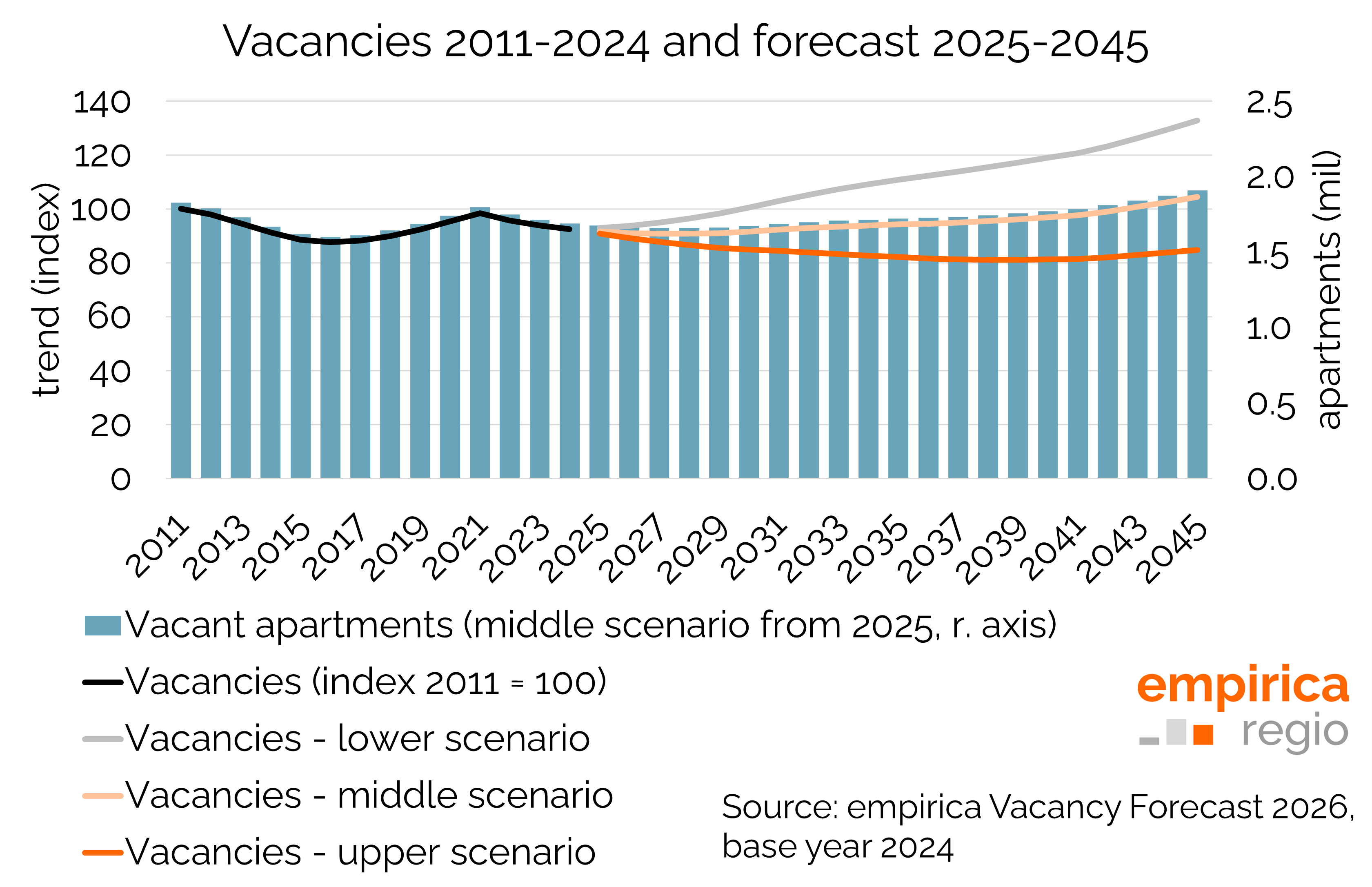
If immigration were to stabilise permanently at the low level seen in 2025, we would have to expect annual increases of up to 45,000 units in the short term, continuing until the end of the 2030s. Only if immigration were to increase significantly – for example, through increased recruitment of skilled workers – could the vacancy rate fall by an average of around 10,000 units per year nationwide by the end of the 2030s.
Conclusion
Taken as a whole, the analysis makes it clear that the risk of vacancy is directly linked to regional population dynamics. In areas with low population growth – which are often characterised by an ageing population and economic challenges such as low average incomes or higher unemployment – vacancy rates reflect structural disadvantages. The situation remains particularly critical in regions experiencing population decline, where the vacancy rate could exceed the 20 per cent threshold by the mid-2030s. As demographic change limits the growth potential of many market regions and emigration is currently stagnating, an increase in unused residential space is to be expected nationwide in the medium term.
Further information
Detailed results and further information on the methodology can be found in a empirica Paper, which is available for download on the website of empirica ag (in German only):