Housing Bubble Index Q2/2026: Housing shortage keeps prices stable
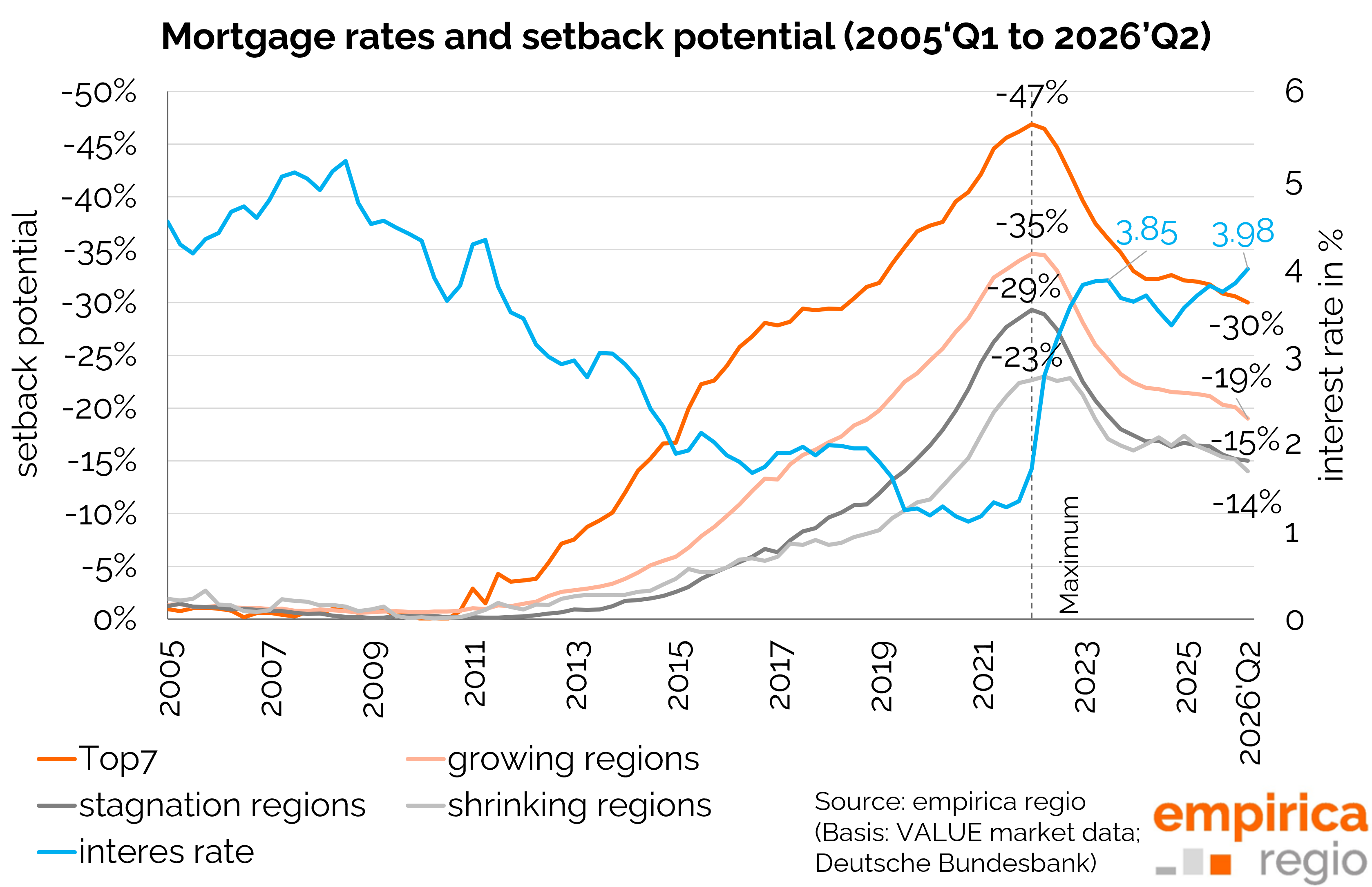
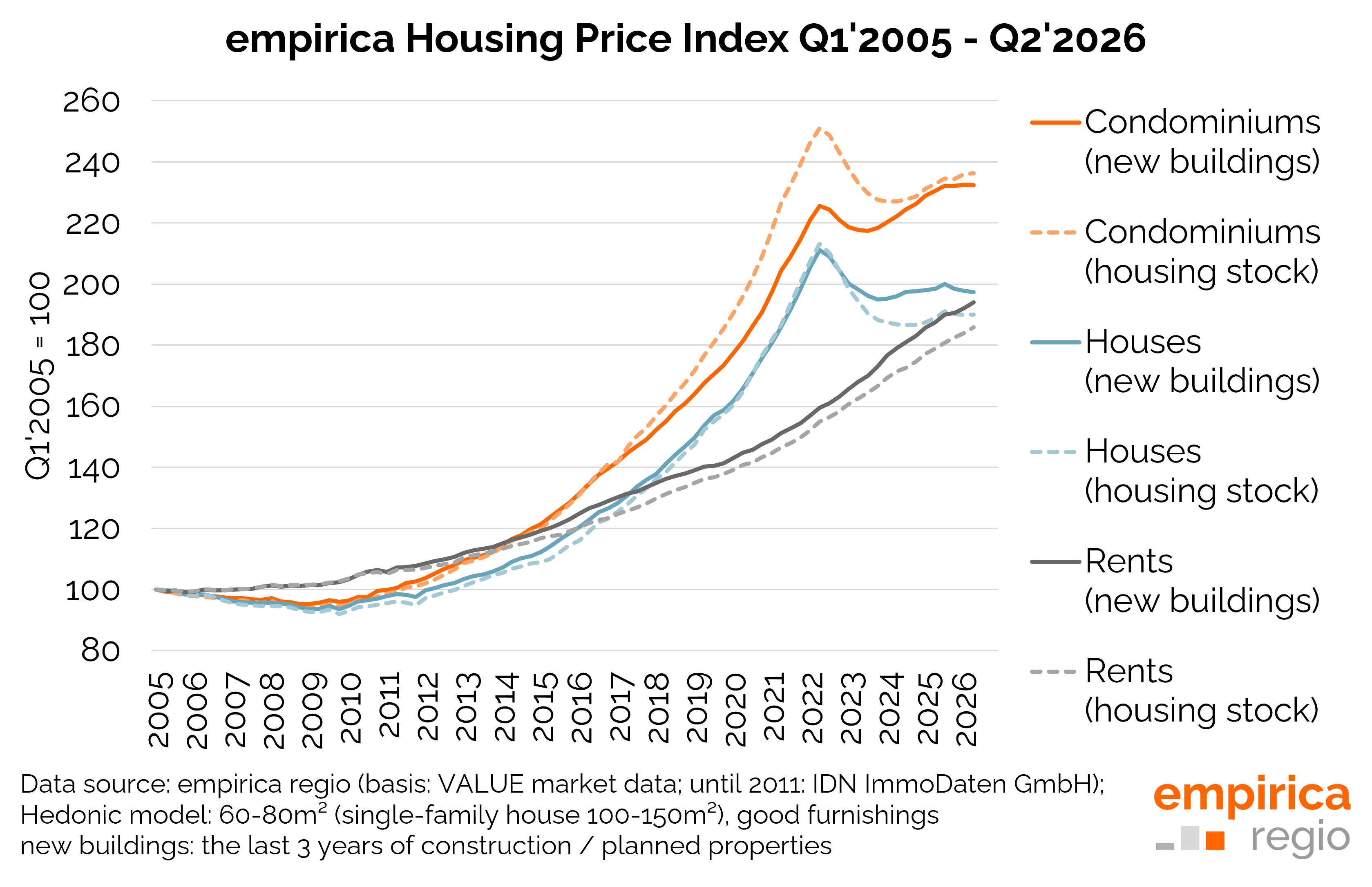
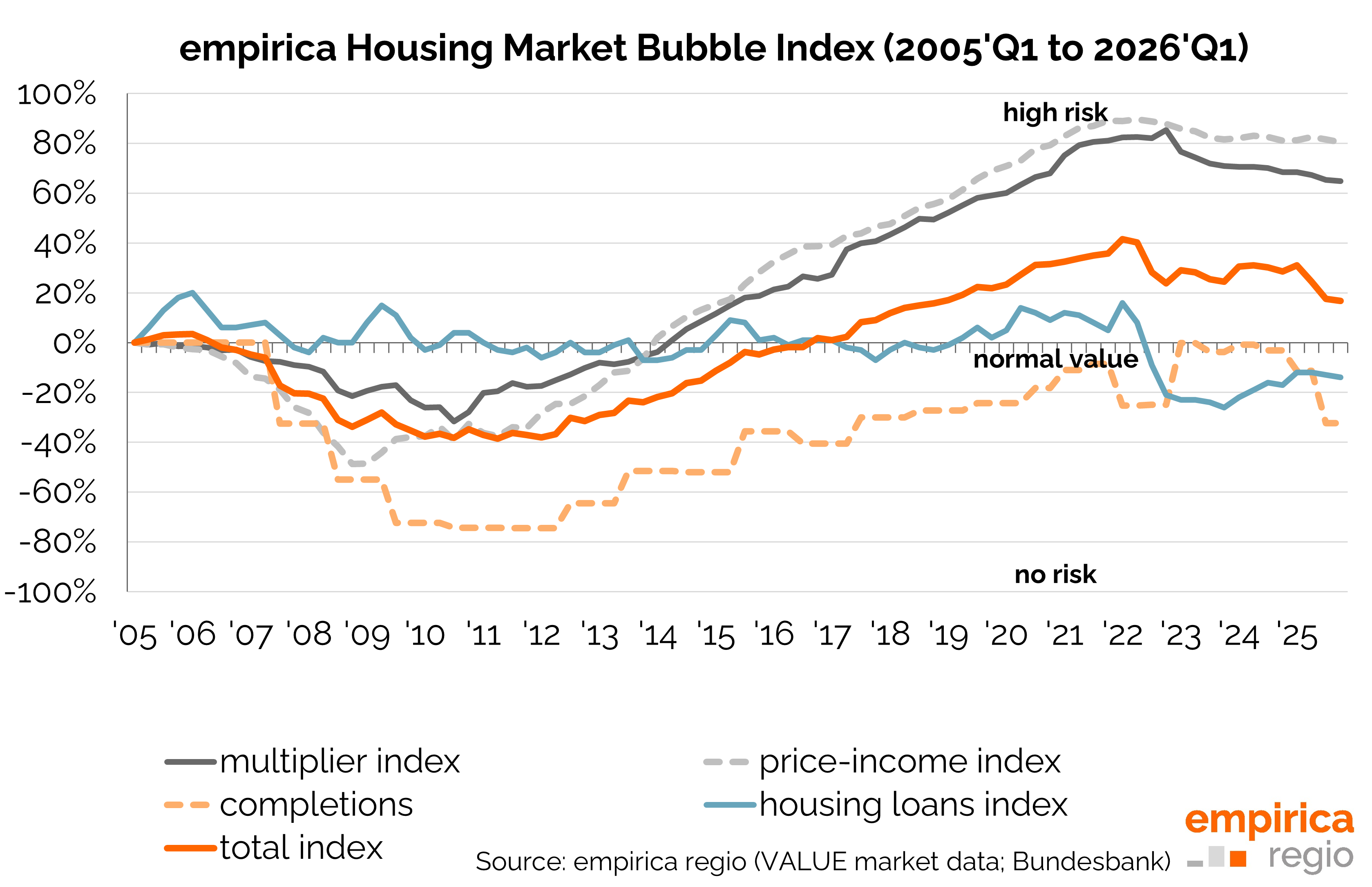
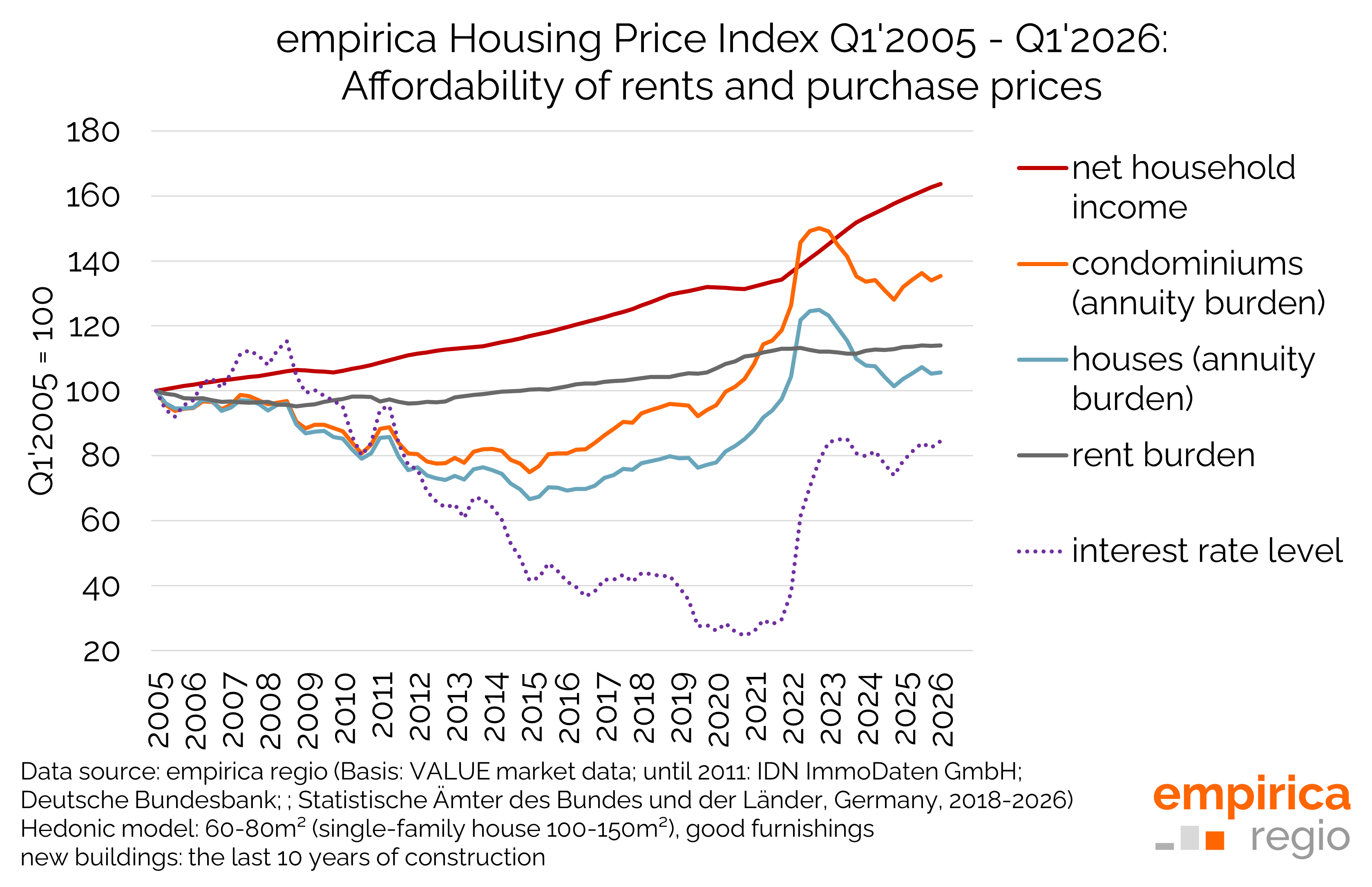
The severity of the housing market bubble risk continues to ease slightly: the rebound potential now stands at just 18% nationwide (Q2/2025: 20%, Q2/2023: 24%), and at 30% in the top 7 cities. This is driven by the ongoing rise in rents, which is underpinning purchase prices. The spread of the bubble risk is also easing slightly (-1 point), yet still affects 272 of 400 districts with moderate to high risk. Among the major cities, the picture varies widely: Dortmund shows only a low risk, whereas Hamburg and Bremen are rated as high risk and the remaining Top metros tend towards high risk.