empirica Income Model
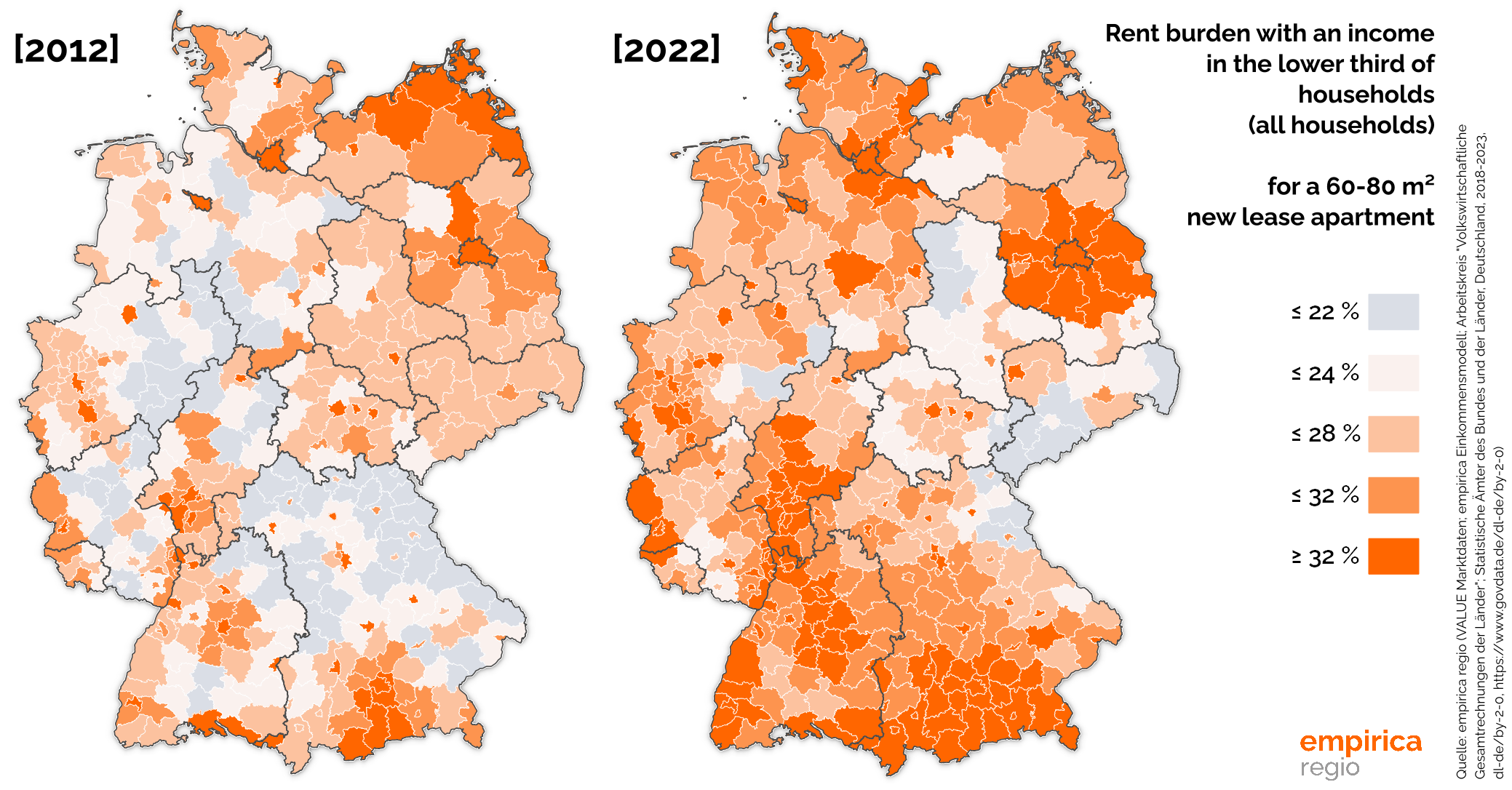
Target-group-specific household incomes provide an important statistical basis for determining regional affordability in the rental and ownership market. This makes it possible to assess the availability of affordable rental offers or to calculate the affordability of owner-occupied properties for private households. In doing so, we consider not only average incomes, but use extensive model calculations of the regional income distribution across all income classes.
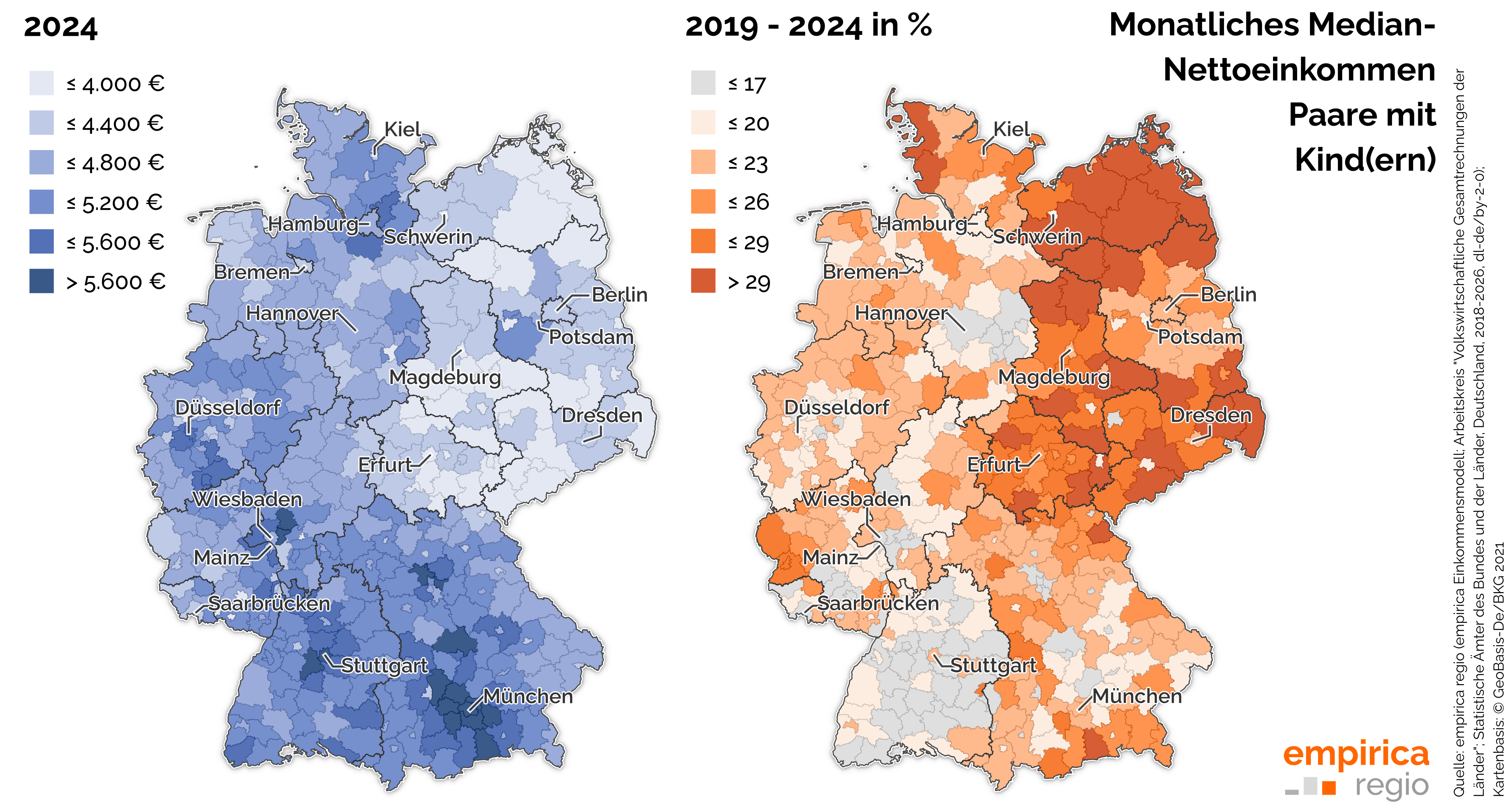
The net income of private households results from adding monetary social benefits and other current transfers - which private households mostly receive from the state - to primary income; income and wealth taxes, social security contributions and other current transfers made by private households are deducted. The disposable income of private households therefore corresponds to the income that ultimately accrues to them and that they can use for consumption and savings purposes.
Data source and methodology
The distribution of net incomes is estimated using the empirica income model. This takes into account, among other things, data from wage and income tax statistics, national accounts and further data for modelling the different regional income levels and distributions.
The empirica income model estimates regional distributions of net household income at district or municipality level. The model allows differentiated analyses by household type, age group and income quantile (e.g. median income, 10/33/90% quantile), as well as the calculation of the number of households in specific income classes.
The data can be linked with household figures from empirica regio. The empirica household model uses various time series to estimate the number of private households over time for districts from 2005 and for municipalities from 2011.
Example analyses based on the income modelling can be found for download on the empirica ag website:
External download: empirica Paper No. 280 (external download, in German only).
External download: empirica Paper No. 258 (external download, in German only).
External download: empirica Paper No. 246 (external download, in German only).
Ordering options
Are you interested in target-group-specific income data? Please contact us by email at info@empirica-regio.de or by phone at +49 (0) 30 884 795 55. We would be happy to discuss in detail which analyses we can provide for your specific question and prepare an individual offer for you.