Housing Bubble Index Q2/2026: Housing shortage keeps prices stable


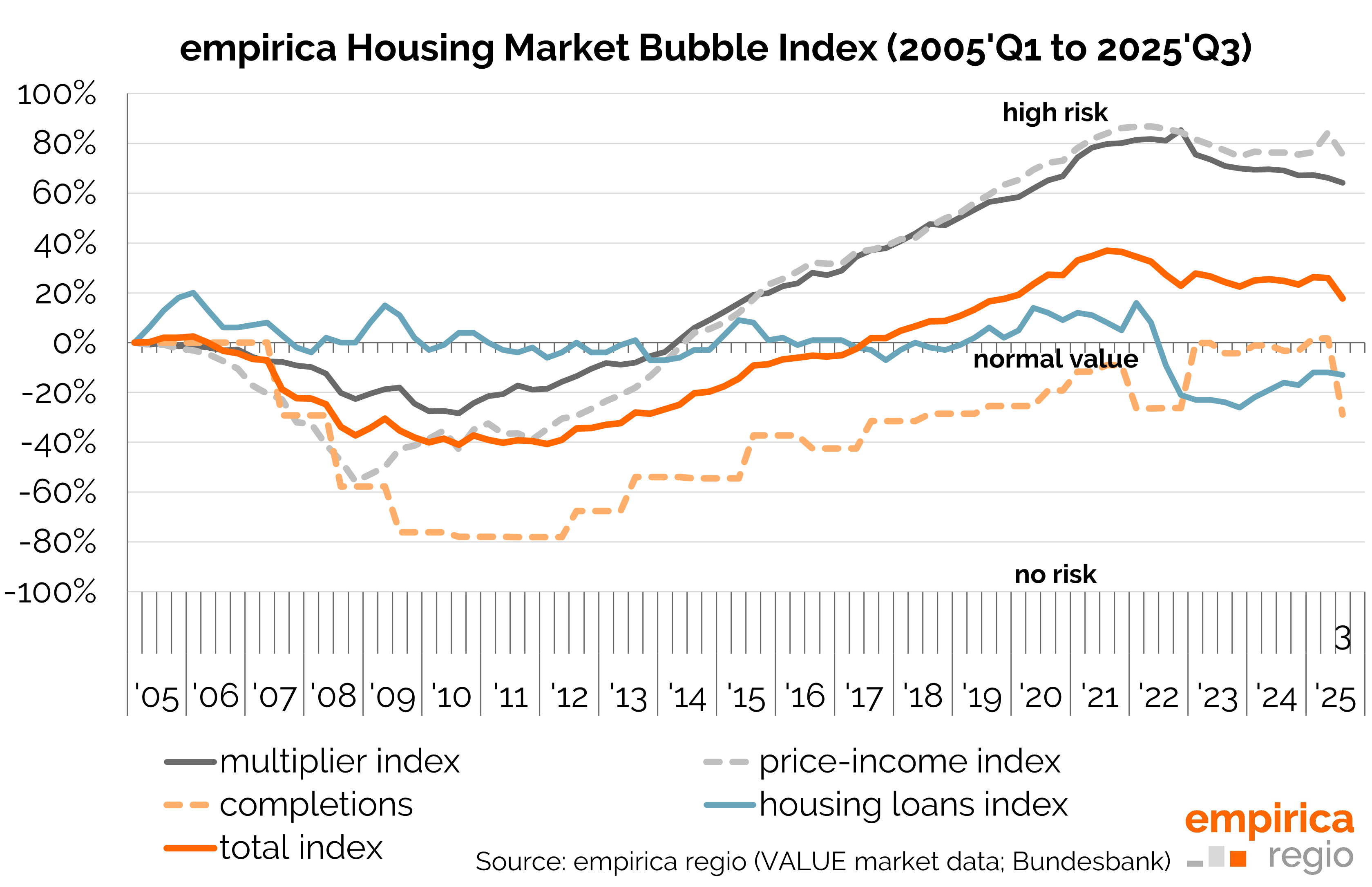
The severity of the housing market bubble risk continues to ease slightly: the rebound potential now stands at just 18% nationwide (Q2/2025: 20%, Q2/2023: 24%), and at 30% in the top 7 cities. This is driven by the ongoing rise in rents, which is underpinning purchase prices. The spread of the bubble risk is also easing slightly (-1 point), yet still affects 272 of 400 districts with moderate to high risk. Among the major cities, the picture varies widely: Dortmund shows only a low risk, whereas Hamburg and Bremen are rated as high risk and the remaining Top metros tend towards high risk.
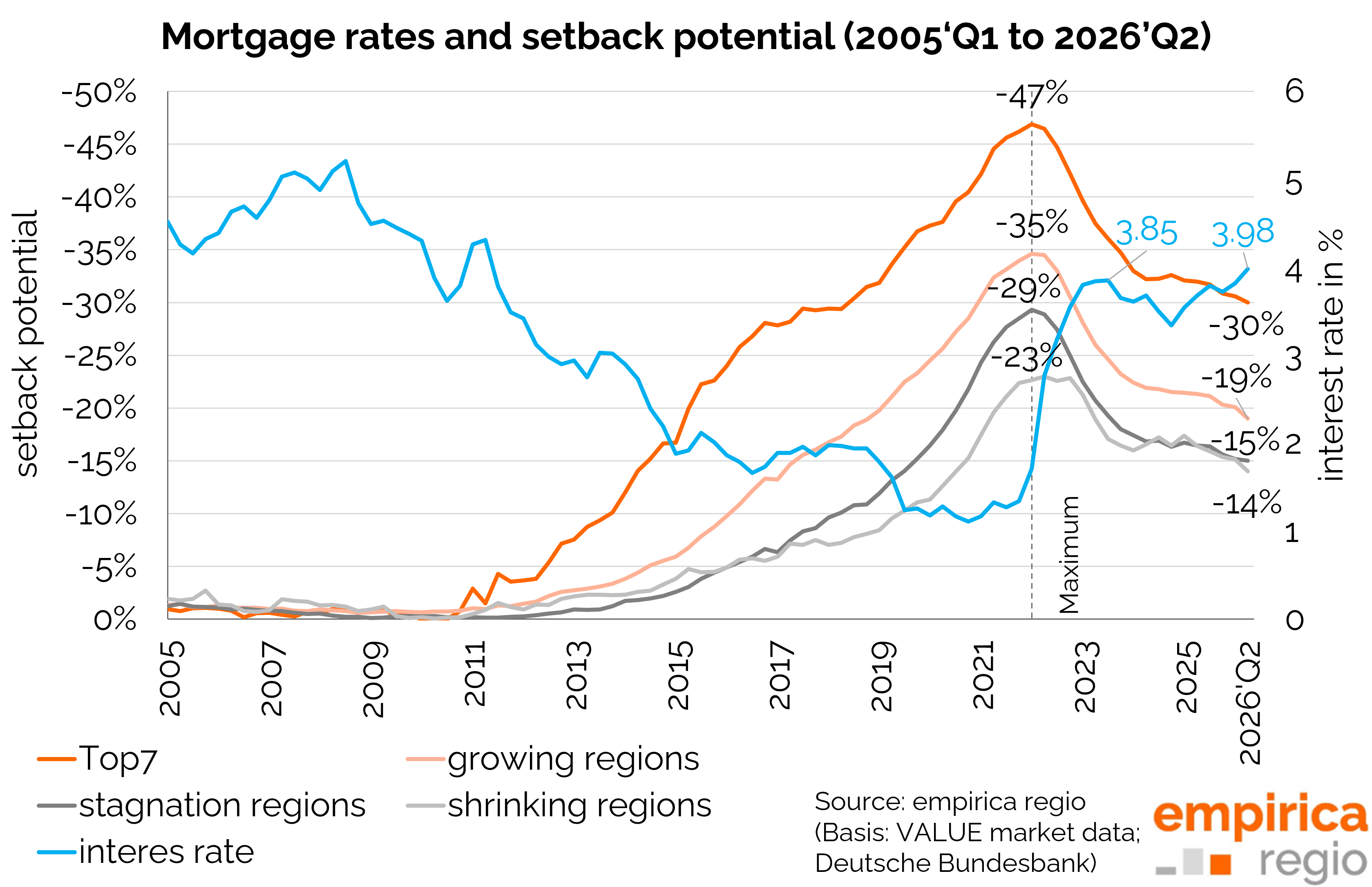
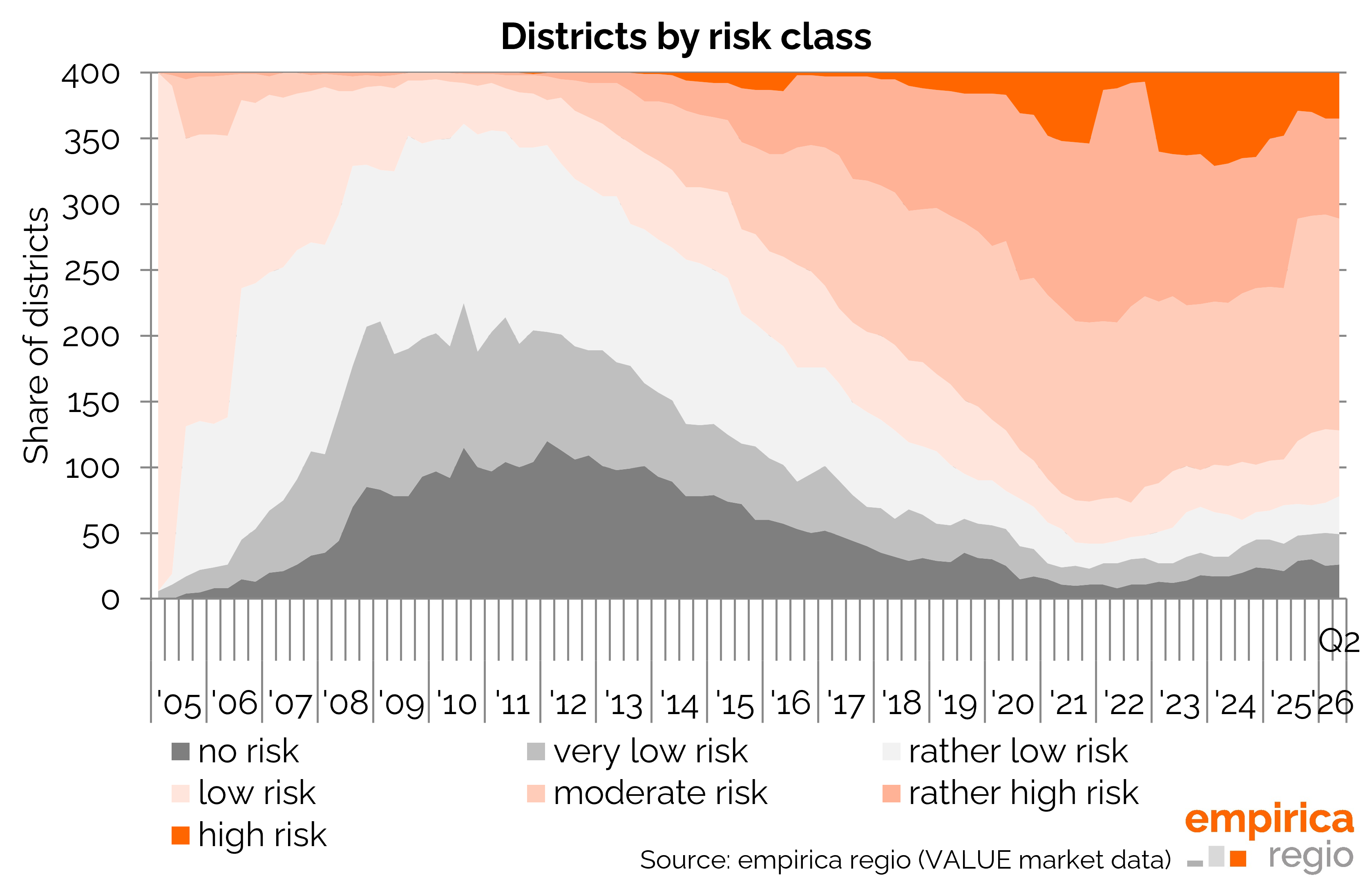
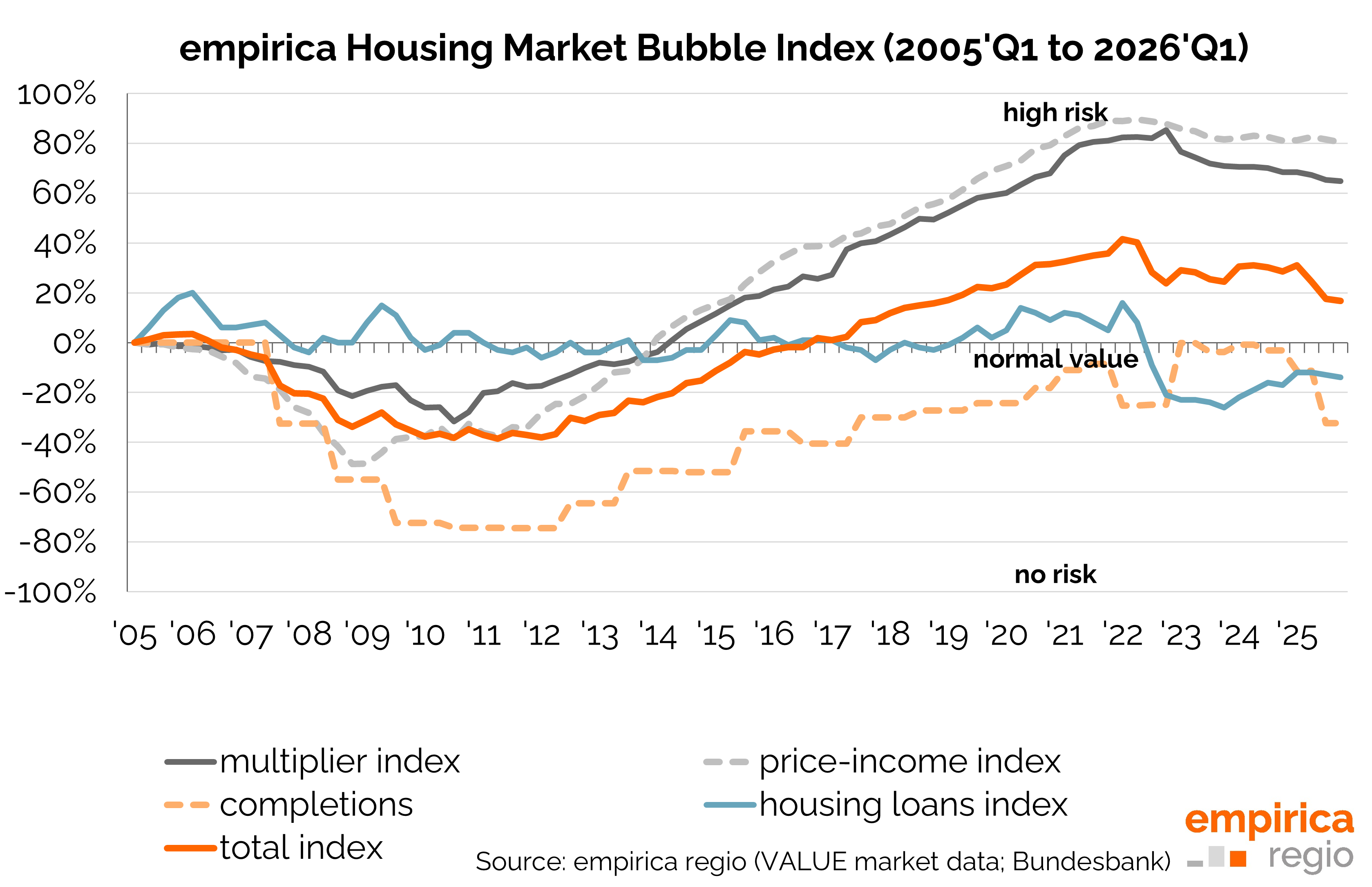
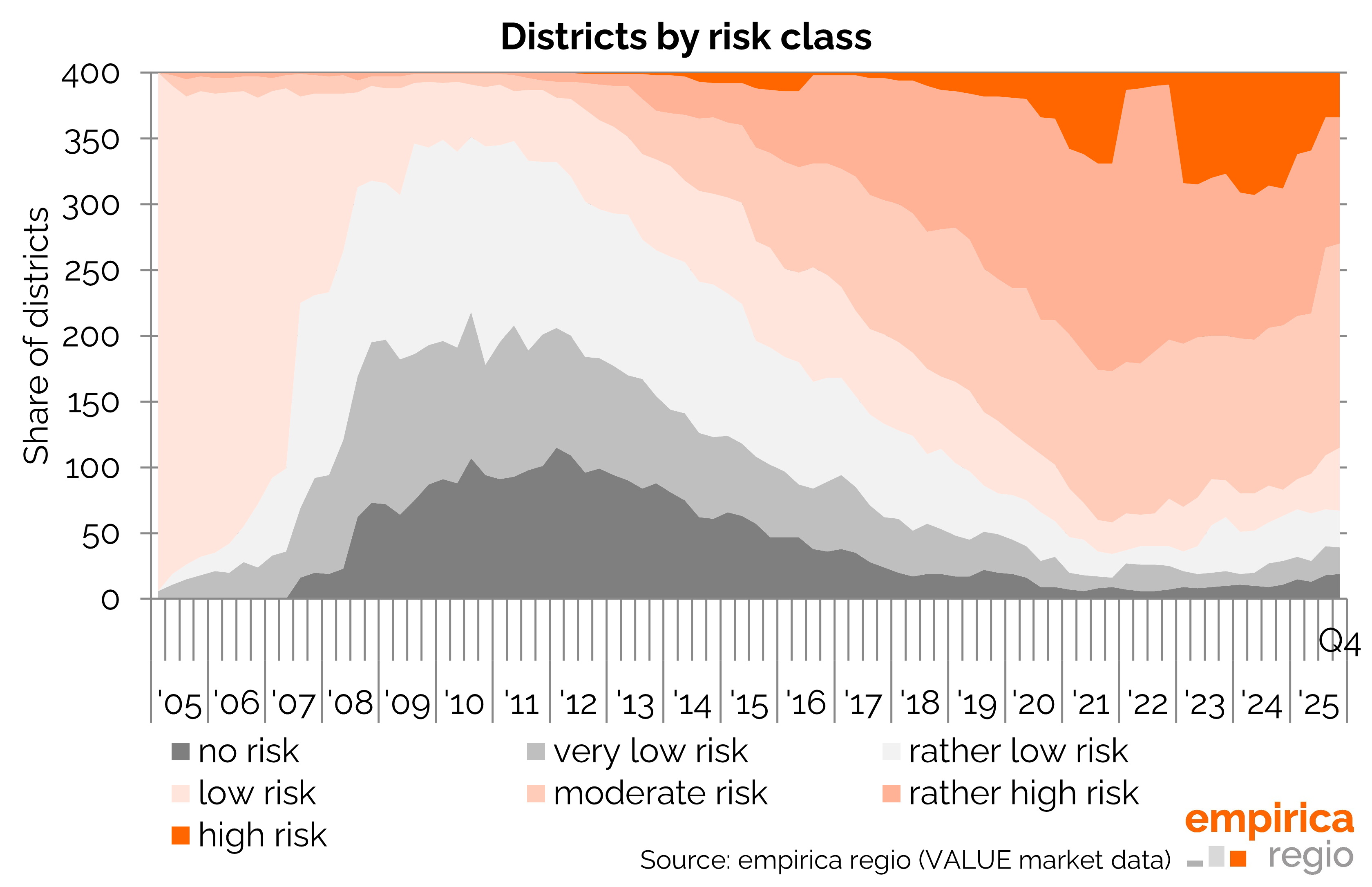
Little movement can be seen across the four sub-indices: completions and the multiplier are stagnating, construction loans are easing slightly (-3 points), and the price-income index is falling only moderately (-1 point). The spread of risk also presents a calm picture: currently 40% of districts show a “moderate” bubble risk and a further 28% show an “elevated” or “high” risk – well below the peak of 339 districts with moderate-to-high risk seen at the end of 2021.
Data basis Housing Bubble Index
The empirica housing bubble index is a quarterly index that assesses the risk of a property bubble in various regions of Germany. All data can be obtained as an individual dataset or via database access from empirica regio. Detailed results and further information on the methodology can be downloaded here:
The current commentary by Dr. Reiner Braun: The property market in a “racing standstill” – rising interest rates and political uncertainty are dampening buyer appetite
The German property market remains stuck in a paradoxical phase of stagnation. While mortgage rates have crossed the psychologically critical 4 percent mark and continue to rise, property prices remain stable, and the risk of a bubble is even easing slightly. The dynamic is best described as a “racing standstill”. Market pressure is growing, yet a price slump has failed to materialise. A key reason for this is an artificial shortage of housing.
Artificial scarcity is propping up prices
A drastic slump in construction activity is currently preventing property prices from collapsing. Without this limited supply, prices would already have fallen sharply with the interest rate turnaround in 2022. However, this is primarily an artificial, or rather qualitative, shortage, as a recent analysis by empirica demonstrates (link to the paper , in German only).
Housing shortage is not housing homelessness
Germany is suffering from a qualitative shortage, not acute homelessness. Many people do live in a home, but it often does not meet their optimal criteria in terms of size, location or fittings. As a result, the search for the ideal property becomes an ongoing process.
This situation gives prospective buyers a strong negotiating position:
Conclusion: price stability is being put to the test
At present, the housing shortage still acts as a buffer that stabilises the market and dampens the risk of a bursting property bubble. However, should interest rates continue to climb and uncertainty over jobs and renovation obligations persist, this fragile balance could be thrown off kilter.